During the second week of my rotation, I had the opportunity to make a day trip to an outreach center affiliated with Dhulikhel hospital. The city of Dhulikhel is actually a medium-sized city and not considered rural by the Nepali. Dhulikhel hospital has 15 affiliated outreach centers located in hard-to-reach rural areas around Nepal. These outreach centers provide basic health services to rural communities and are staffed by a single doctor, nurses, pharmacists, and other support staff who live on site or nearby.
If the cases are too complex, then the patients are referred to Dhulikhel hospital or other large hospitals.
The outreach center we visited was located in the rural town of Dhading. Besides the driver, our group consisted of an optometrist, an intern physician named Amartya, another American fourth-year medical student (MS4) named Emily, and me. Amartya was rotating with the ophthalmology department, so our mission for the day was to attend to the ocular health of the patients. This included checking their vision using a Snellen chart, checking for cataracts and other ocular issues, and also providing reading glasses.

The hilly, sparsely populated rural town of Dhading, which is serviced
Dhading was actually quite difficult to reach because it was located in a remote area and thus had no signage or roads. We actually got lost on the way there because the driver had never been there before and had to keep asking passing locals for directions. When we finally arrived, we were greeted by the staff on site and immediately served a homemade breakfast consisting of curry and fried bread.

Front entrance of Dhading Medical Outreach Center

Our team having breakfast in the hospital’s canteen
After breakfast, we began seeing our patients. Most patients were elderly, at least past the age of 60. We hardly saw any pediatric patients. The most common complaint was presbyopia, and we provided many people with reading glasses. Cataracts were also quite common. Most visits took around 5-10 minutes, and we saw around 30 patients in the day.
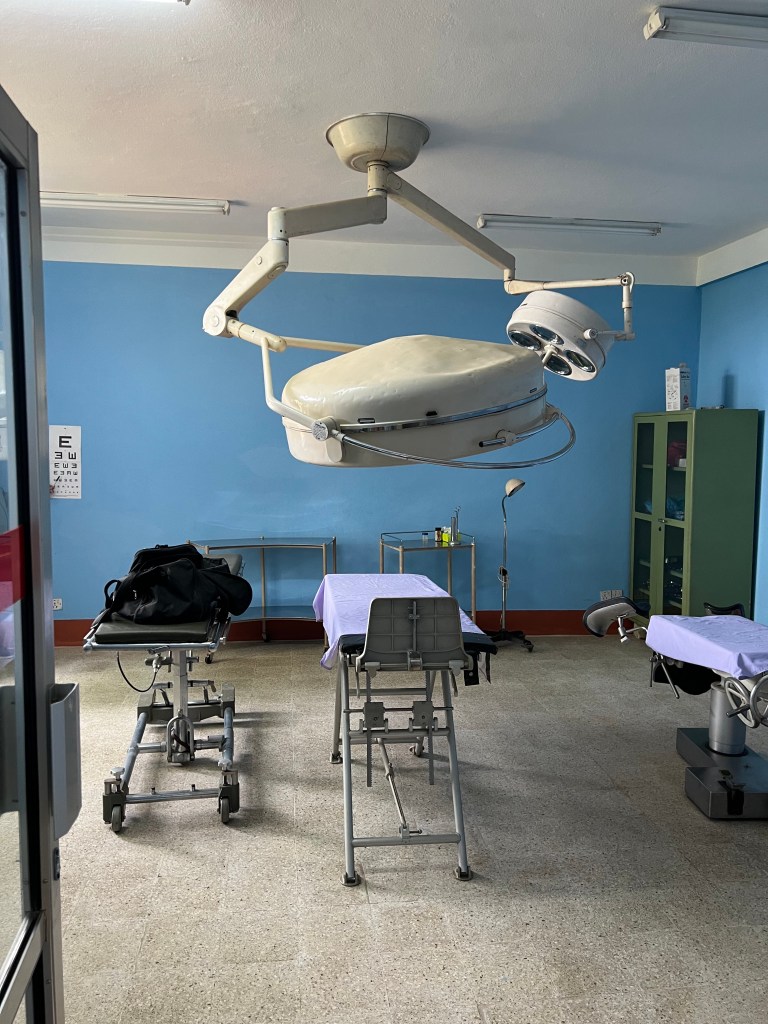
Surgical suite with a Snellen chart on the wall where we saw patients
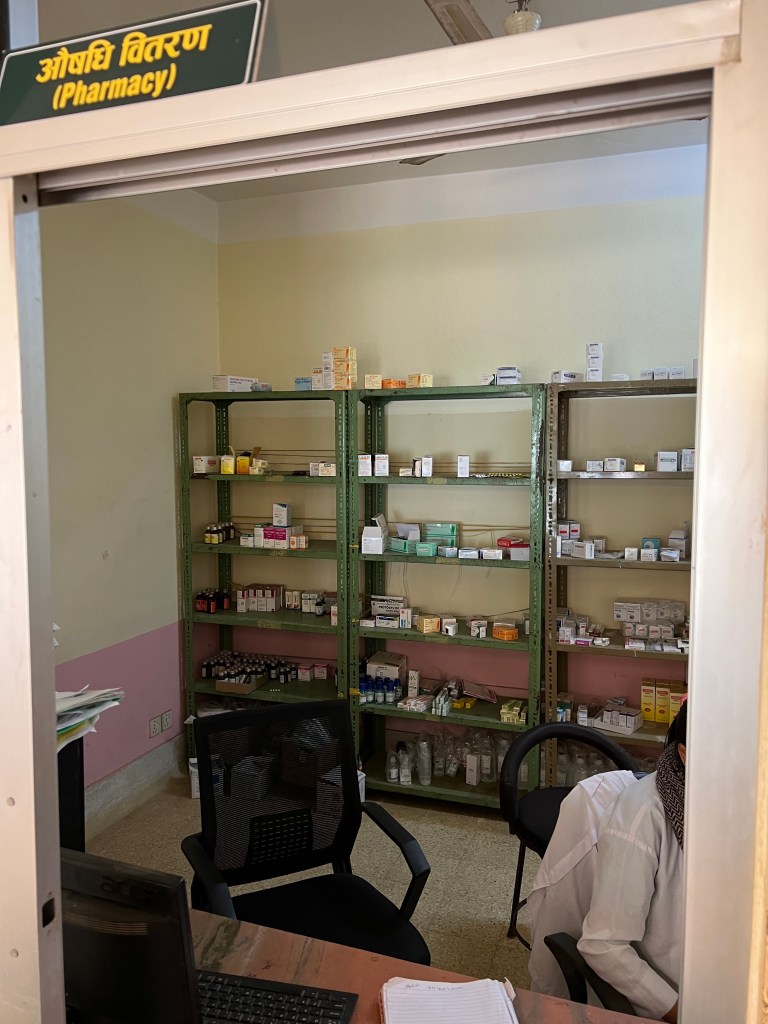
Pharmacy at Dhading Outreach Center

Patient educational material in Nepalese at the Outreach Center
Between patients, I also chatted with Amartya and learned that he was actually planning to apply for residency in the USA. We discussed differences in medical training and practice between our two countries, and I also answered his questions about applying to residency as best I could. After finishing our clinical duties for the day, we had lunch before setting out.
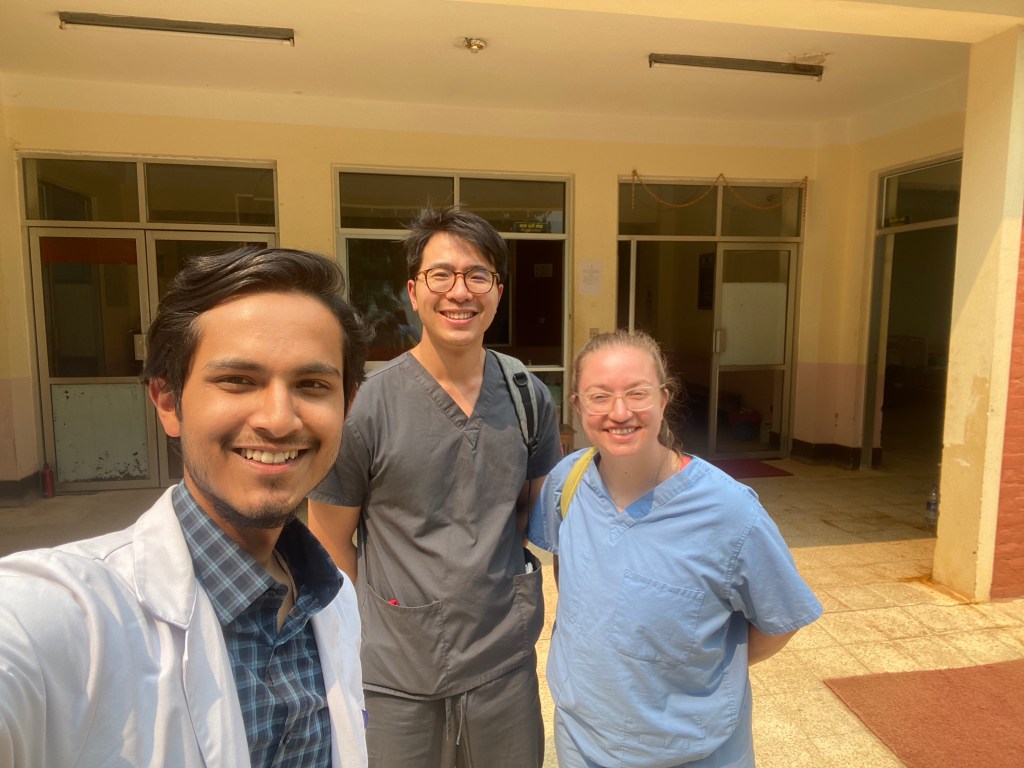
Amartya, Emily and I posing for a selfie in front of the Outreach Center at the conclusion of our visit to Dhanding
This was an educational and fruitful visit to Dhading outreach center. According to Amartya, this was actually rural Nepal and I was able to catch a glimpse of how rural Nepali people live and how they obtain healthcare. I was even able to perform some vision tests on some Nepali patients using a Snellen chart. I also had the opportunity to discuss the process of applying for medical residency with a Nepali intern and provide what advice I could. I am very glad that the international student committee at Dhulikhel (i.e., Pramesh Koju) was able to arrange this outreach center visit for me and help me see a bit more of Nepal.
