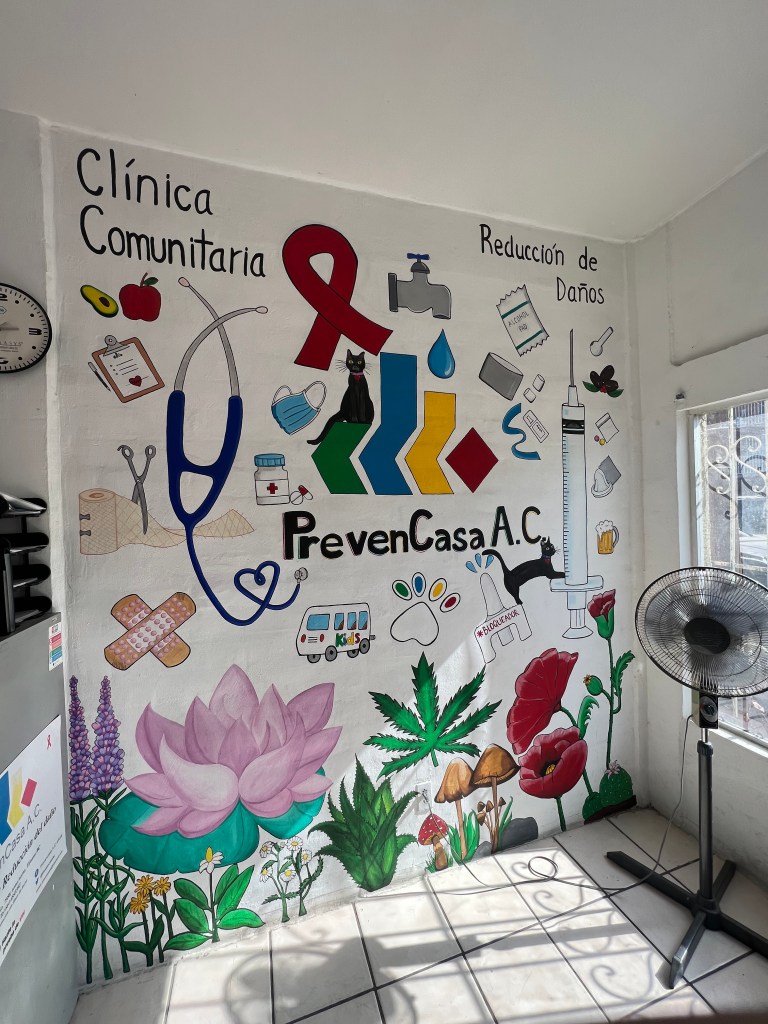
As the culmination of my medical school experience, I spent four weeks rotating across border health clinical sites, including the Cruz Roja hospital and Prevencasa clinic in Tijuana, Mexico, as well as in the asylum clinics located at the Sheraton and Ramada Hotels in San Diego through the UCSD Asylum Seeker Medical Screening and Stabilization Program. Each of these sites offered a dramatically different experience, ranging from experiencing ICU-level care in an inpatient setting at Cruz Roja to providing counselling at Prevencasa to patients experiencing the trauma of being separated from their families by the border. Having the opportunity to see the similarities and differences in how we deliver care on each side of the border was eye-opening, as was the experience of chatting with Mexican medical students and residents about their experience navigating the medical education system.
Beyond the experience of participating in clinical care, I was particularly captivated by the systems-level aspects of each site, particularly the asylum clinics located in San Diego. I learned that I’d been spending the past five years driving right by hotels that had been converted into medical screening centers and short-term lodging for asylum seekers without even realizing it. Although the locations have changed over the years, these clinics were established in late 2018 and have since been staffed by a combination of family medicine, internal medicine, preventative medicine, and pediatric providers, including physicians, nurse practitioners, and physician assistants. As of April, 2023, these sites have screened over 213,000 asylum seekers.
Having the opportunity to venture into these clinics and participate in the process of medically clearing asylum seekers to continue their journeys simultaneously helped to draw into focus how much I’ve learned about immigrant health in San Diego while studying at UC San Diego, as well as how much I still have to learn. While the process of medically clearing people tended to be fairly mundane on a day-to-day basis, primarily consisting of questioning patients about URI symptoms and GI distress, the financial, legal, and logistical aspects of managing clinics that see hundreds of patients who have recently crossed the border each day has been fascinating to me. Realizing that 99% of the patients I see will continue on to destinations beyond San Diego within 2-3 days makes the activities of these clinics even more impressive.
As someone who imagines being involved in public mental health program development and administration in the future, I’m immensely grateful for the opportunity to witness the asylum clinics’ activities firsthand. While there are inevitably some inefficiencies in coordinating such a massive program that remains in constant operation, including overnight patient arrivals, I was ultimately struck by how smoothly everything runs. Patients are seen in a timely fashion, necessary medications are ordered and delivered from local pharmacies, and patients are transferred to and from the hospital as needed.
Having been involved in refugee health from my earliest days of GHAC through my work with Somali Family Service of San Diego, concluding my medical school experience in a refugee health clinical context was a truly special full-circle moment. As I look to my next steps in residency, I’m excited to see how these experiences translate into my future endeavors.
