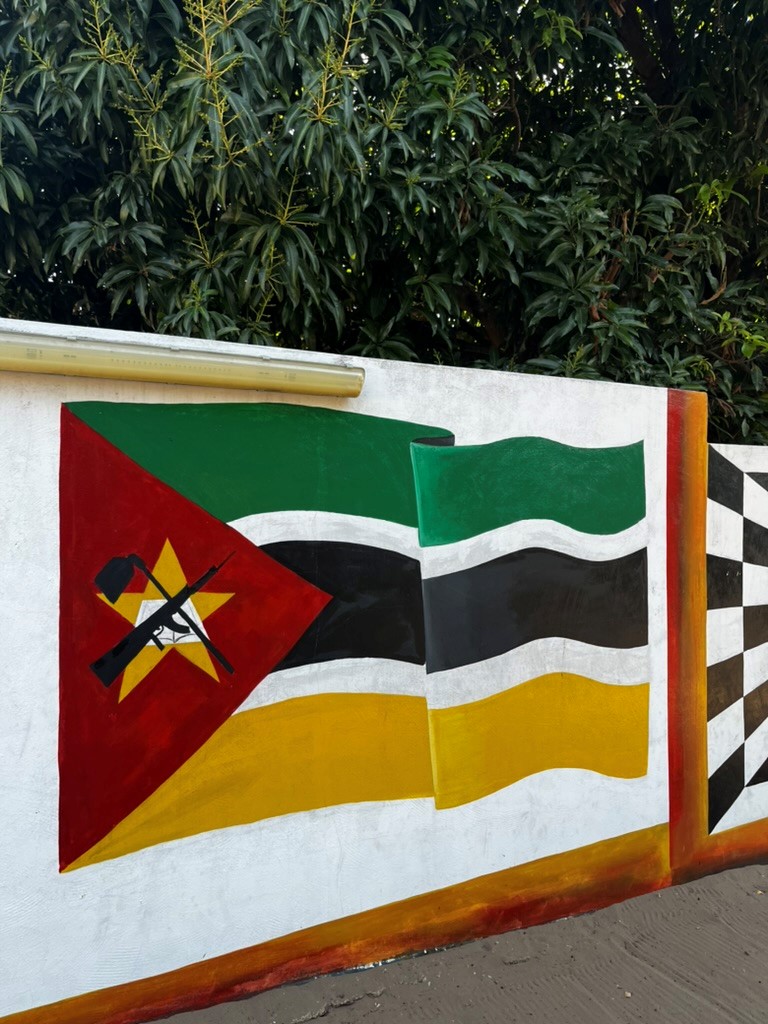
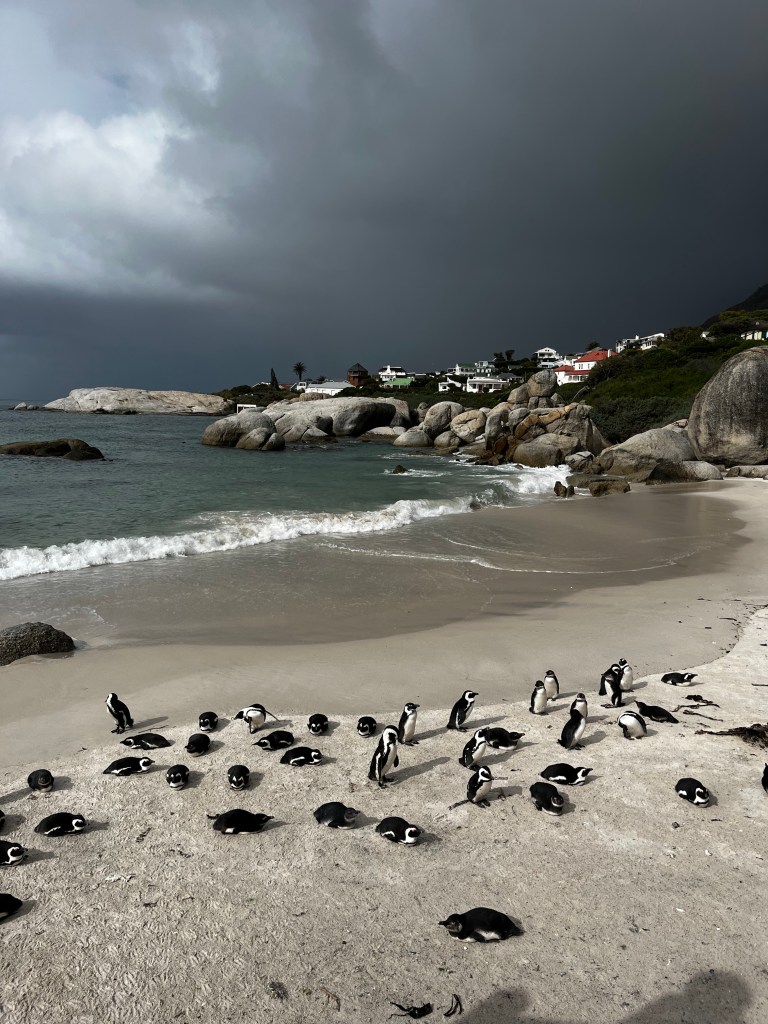
Olá! Tudo Bem. Hello from Maputo, Moçambique! A country home to some of the friendliest people in the world.

I spend most of my week at Maputo Central Hospital, the largest public hospital in all of Moçambique. My research is in Deep Vein Thrombosis (DVT) diagnosis in the inpatient and surgery setting. We are evaluating the effectiveness of Point of Care Ultrasound (POCUS) in identifying patients with DVT. I’ve teamed up with the UCSD hematologist, Dr. Annette Von Drygalski, and the Maputo Central Hospital team, Dr. Virgilio Nhantumbo and Dra. Patrícia Silva. The hematology fellows have been an amazing help in connecting me with the internal medicine team and the cardiovascular surgery team, who have helped me identify patients that POCUS has been used for DVT confirmation.
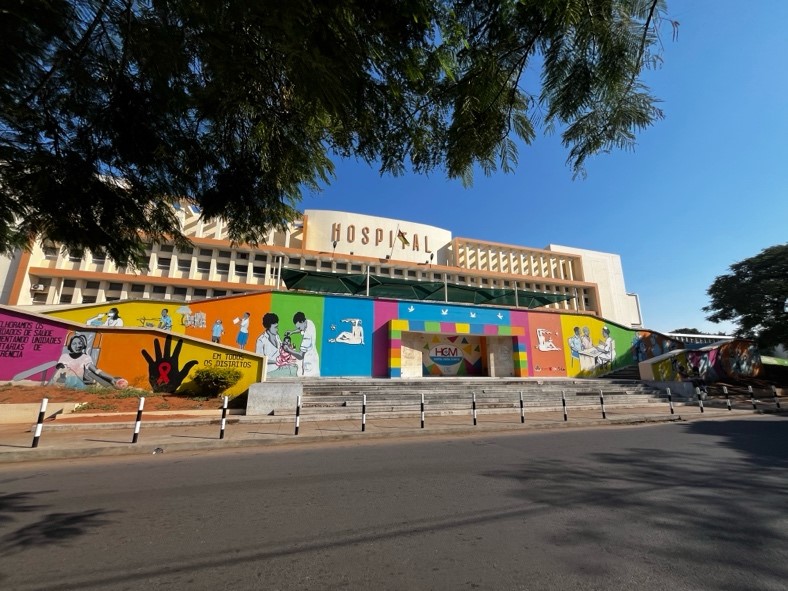
Within Maputo Central Hospital, the cost of care is typically free for patients – or extremely low at ~1 metical (5 cents) for all care received. However, because ultrasound and CT/MRI imaging are limited in availability, it typically requires patients to be seen at private clinics where the cost of care increases to ~1800 meticals ($100). This is a massive barrier to the patient population seen at Maputo Central Hospital who come to the public hospital due to lack of financial means to be seen elsewhere, and at times even lack the economic means to afford food.
We are hoping that Butterfly ultrasounds can be put in the hands of physicians and residents here at Maputo Central to reduce the cost of care to patients and improve the diagnosis of DVT in patients that present to the Emergency Department and other areas of the hospital.
Only a select few private hospitals within Moçambique have electronic health records, meaning the majority use paper records for everything. I start my days with scouring a book that is about 4ft long filled with surgery logs of which patients the team has seen, which department saw them, and what diagnosis was made. From there a Processo number is assigned to each patient and a request can be made to the record department to gather the folder with their medical information. Unfortunately, about 3 years ago there was a major fire in the record departments, so a lot of patient files were lost. However, the wonderful mamais in the administration department do their best to help me (and let me fumble with my Portuguese).
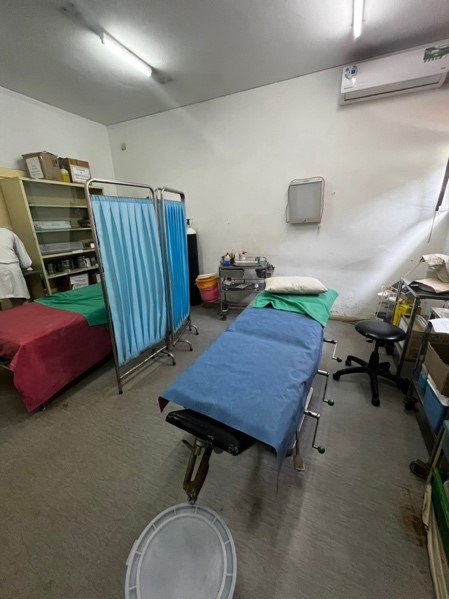
While I have heard of “Doctor’s handwriting”, I had never experienced it in another language which adds a whole new challenge to translating medical history and demographic data. That said, I have learned so much from these chart reviews and conducting rounds with the various teams. One of the largest challenges to the healthcare system in Moçambique is the lack of resources and funding. Patients will present with diseases like iron deficiency anemia and coronary artery disease. However, the hospital has limited access to IV iron supplementation and the tools needed for a Coronary Artery Bypass Graft. Often, critical treatments like Hydroxyurea for Sickle Cell anemia, are unavailable, leaving newly diagnosed children in pain or attempting to cross the border to acquire treatment in other countries that may have it available. I was recently told by Dr. Sebastião that while they have X-ray machines and the space within the laboratories to perform common tests, they lack the reagents needed to perform them. The sheets used to print X-rays on are too expensive for the hospital to acquire in large enough quantities and the chemical reagents and machines needed to perform PCR testing or D-Dimers are non-existent here.
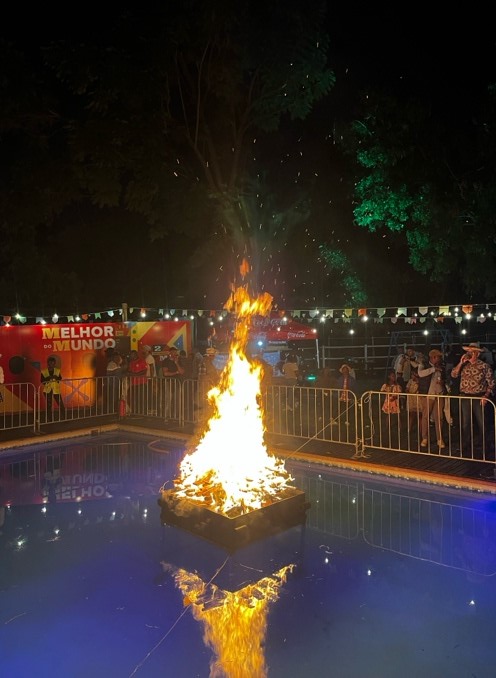
Aside from the challenges I have seen working in Moçambique, it is a beautiful country. Thanks to a previous GHAC student (Chioma) who came to Maputo, I learned about Pastel De Nata. It is originally a Portuguese pastry but it made its way to Moçambique, and it is to die for. It tastes like a crème brûlée sitting in a delectable puff pastry. My first weekend here I wandered to a Brazilian patisserie, learning that due to Portugal’s influence on Moçambique, this city has become a haven for those who speak Portuguese. I was invited to the 3rd annual Festa Junina, or June Festival where it is tradition to eat a lot of meat, drink, dance, and watch a bonfire be lit!
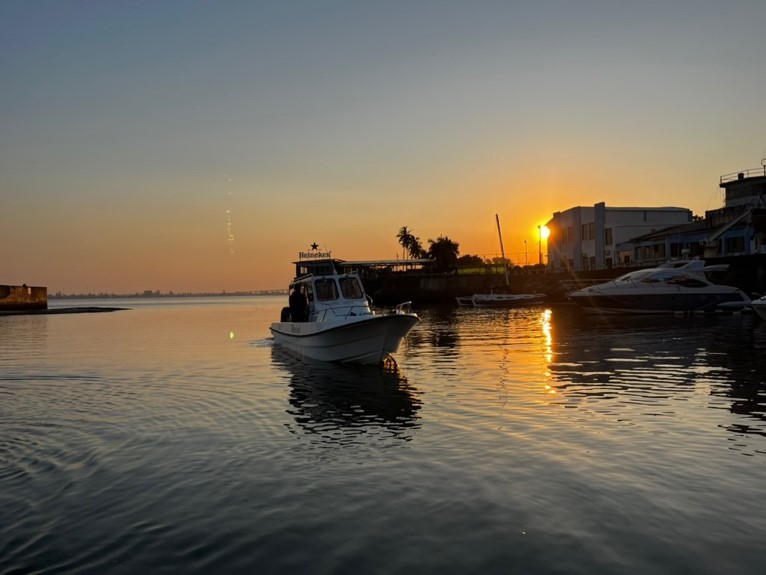
This past weekend I took a speed boat tour to Inhaca Island, a small island across the bay of Maputo that is only reachable by boat. The beaches were pristine, clear, and beautiful! After a morning of snorkeling, I was able to enjoy a wonderful lunch of grilled local fish in the town of Inhaca, followed by more snorkeling on Ilha Dos Portugueses. To cap the day off we watched the sun set as we docked back into Maputo. Because of Maputo’s diverse community, the Expat community is large! I enjoyed the Euro 2024 final between England and Spain, where there was a HUGE turnout of support for both teams, and what an amazing game it was.