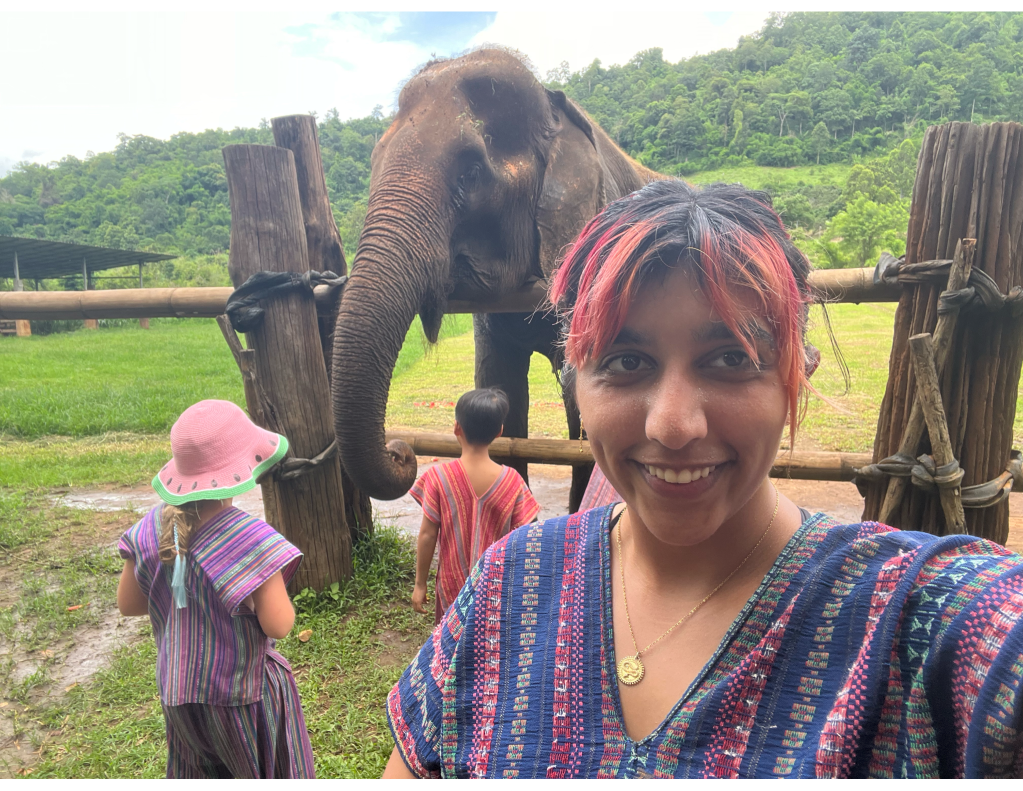
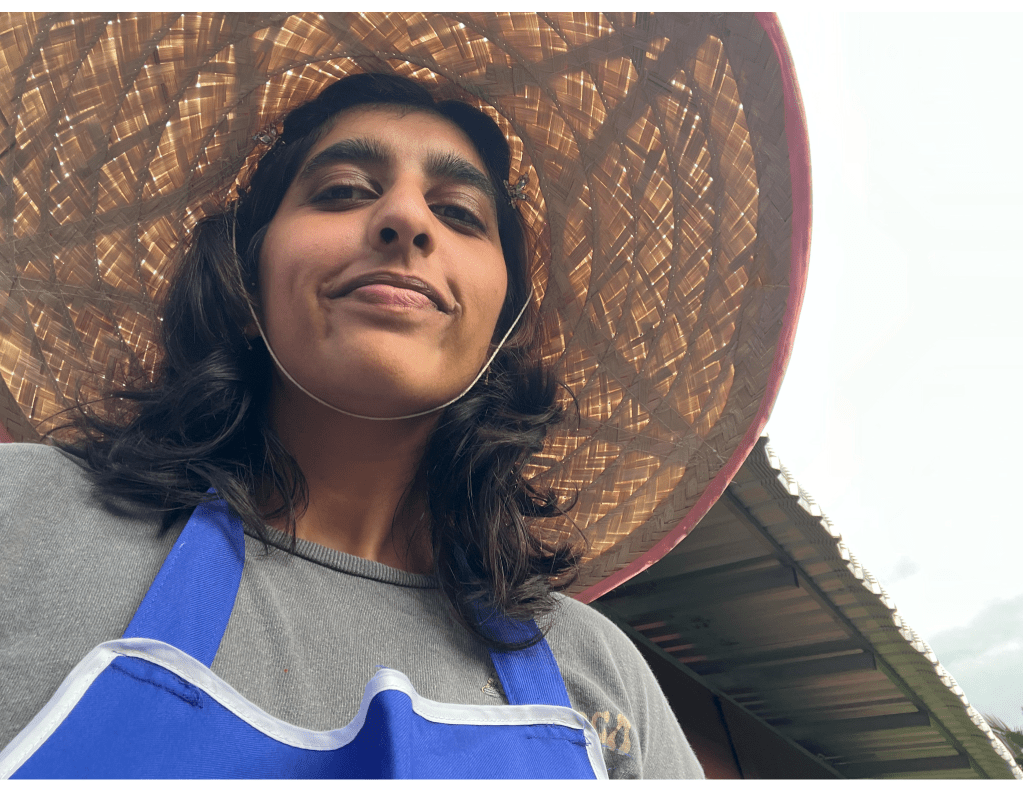
I write to you from Phuket: my last weekend in Thailand, spent in the bluest waters I’ve ever seen with my own two eyes. Imagine my gratitude when I saw my first coral reef, a 30-minute snorkeling session I lazily floated through while mulling over the state of the world. Would these reefs be here by the end of my life? Would we still have dearths of resources in migrant healthcare by then, too?


My past 7 weeks in Chiang Mai have been pivotal. Not only have I refurbished my research muscles which had weakened in the era of COVID-19, but I’ve been guided to my post-first year light-at-the-end-of-the-tunnel by meeting minds instrumental to the large-scale change I aspire towards. I started my journey meeting Dr. Angkurawaranon, a man of millions of projects. I saw the way he managed his team with a compassionate hand and a joyful demeanor, all while juggling about a dozen grants at a time. Because of his work, Chiang Mai University (CMU) Hospital is able to offer reflective care to a local community that research is drawn directly from. Also because of him, students like me get to experience a glimpse into our futures in global health, inspired by an excellent department of colleagues from a multitude of disciplines. One such colleague was an administrative staff I endearingly referred to as ‘phi’ Jane (a thai honorific for older sister) who took such good care of me from day one: filling me in on cultural adjustments, leaving me snacks when I wouldn’t step away from my computer for hours at a time, retrieving medicine from a nearby pharmacy when I felt ill, and even giving me not just a birthday gift but a goodbye gift as well. I wonder how someone gets to be of such good-hearted nature, and how lucky I was to be the recipient of it.

My first week at CMU, I shadowed the palliative care team, alongside 5th and 6th year Thai medical students. The team was only around 5 years old, as palliative care seems to be a field in its infancy here. Through the pioneering of less than a dozen doctors, hundreds of patients across all kinds of wards now had access to dignifying, compassionate care. In the morning, we walked as a cohort to the ICU, where a patient lay attached to all varieties of wires and monitors. Since most of the dialogue for transferring care occurred in Thai (which I’m still unfortunately pretty bad at), I gazed around the room looking for clues as to what might have happened. When the palliative team circled to create a plan, I realized how far off all of my guesses were as a medical student translated for me: this man was a faithful dialysis patient unfortunate enough to be severely injured in a vehicle collision, the consequences of which left his family pleading to discharge him so that he could die at home. It is much more common in Thailand than the USA for people to die at home with their families, rather than process the end of life in a sterile, isolating hospital. In surprise, I felt frustrated tears bubble up. It just didn’t seem fair that this man did everything right–adhered to an intensive, time-consuming, life-prolonging dialysis treatment plan–just to have that effort negated in a moment of mistake, an accident.
As we walked across the skywalks connecting different areas of the hospital, I bookmarked a plethora of palliative care articles recommended by the doctor, which I started to read in the car that afternoon on the way to a home visit. Among a labyrinth of neighborhoods in the suburbs of the city, we found a quaint cluttered home with a friendly cat on the stoop. I watched the two doctors I was with discuss an old man’s health with both him and his wife for almost half an hour before performing a physical exam to assess new bedsores. After another half hour, we recapped changes to overall function and severity of symptoms and confirmed the patient’s decision to maintain current treatment. It was relatively uneventful compared to the morning, but the gratitude was clear as the wife lingered with us by the door and continued to make small talk, all while their cat purred and rubbed up against my leg. It was clearly different than my experience of being an EMT, where things were much more emergent, and homes were much more private. As I walked home from the hospital that evening, my eyes started to swell and hives welled up on my arms, and I thought this was not so dissimilar from being an EMT: being exposed to unfamiliar environments and their allergens routinely. I’m not sure if it was the dander or the mosquitos that bit me in that open-door still-air home, or something else entirely.
Weeks later, I sat in a university cafe scanning the crowd for a colleague of my mentor back in the states. The two of them both practice and research psychiatry within a global health context. This Thai doctor I met with, Dr. Awirut, studied first for 6 years in his home country. Thailand has a medical degree much similar to that of the 6-year out-of-high school program across much of Europe. When I was in Mae Sot to collect research, I remember the Dutch doctors reminiscing on their time in medical school as fairly easy, which shocked me to my core. They told me they could comfortably hold a part time job to pay for the cost of school. Thai medical school culture seemed more similar to mine in the US, as the Thai doctor flashed back to his own sleepless months during our conversation. Once he graduated his residency in psychiatry, he pursued a fellowship in addiction medicine in Canada, where he realized that substance use disorders are much more similar than they are different in cross-cultural contexts. Not only did he see the same kinds of diseases and substances in both populations, but also a relatively similar incidence and prevalence of those factors, too. We talked lots about cannabis in particular, as it had been decriminalized in Thailand only months ago due to its perceived medical benefit (with a dizzyingly quick outgrowth of commercial market growth instead). So, many Thai ERs were now inundated with naive first-time users experiencing extreme paranoia and at times more extreme side effects of cannabis hyperemesis or hyperalgesia. One of Dr. Awirut’s current projects thus was to examine the prevalence of adverse reactions to the substance in Southeast Asian populations, to assess a potential genetic or demographic influence on the drug’s synergy. Despite the media focus on cannabis, alcohol and meth remained the most prominent substances abused in either region he worked in–both extremely difficult (and potentially lethal, if uncontrolled) to wean off of.

I felt in concert with these amazing individuals’ leagues above my own experience, until my last week here. It finally hit me, as I gave a presentation on my research findings to a room of clinical researchers all developing programs of their own, that I was also doing important work. The fully-fledged practicing doctors around me were impressed with my research! My research project had been limited and niche, sure, but it would have a tangible impact on the care of thousands of migrants seeking obstetric care nearby each year. I felt thrilled, connected back to my reflexive research roots of my undergraduate anthropology degree; connected to a larger purpose and a refocus on medicine; connected to the world, the hot humid air, the slower pace of life, and all the joyous people I met along the way.