On my first morning in Quito, I stepped onto the third-story balcony of my host family’s home and was met with a quiet, beautiful surprise—a bright rainbow stretching across the misty sky. I had arrived the day before on a red-eye flight and, still adjusting to the altitude, had gone straight to bed. Waking up to that peaceful view felt like a warm welcome to Ecuador. If this was how my first full day began, I was excited to see what the weeks ahead would bring.

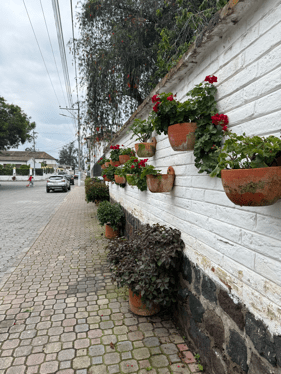
My rotation took place in Puembo, a rural parish in the Metropolitan District of Quito with a population of 22,000. Only 30 minutes from the city proper, Puembo felt like a pueblo with a central park surrounded by little shops and restaurants. On one of the corners of the central park stands the Centro de Salud, ran by the Ministry of Health. The Centro is composed of one supervising family medicine doctor, two “Rural” doctors, a midwife, a dentist and several support staff. In Ecuador, after graduating from medical school, all doctors are required to do a year of “Rural,” where they practice in a Centro de Salud before applying for a residency program.
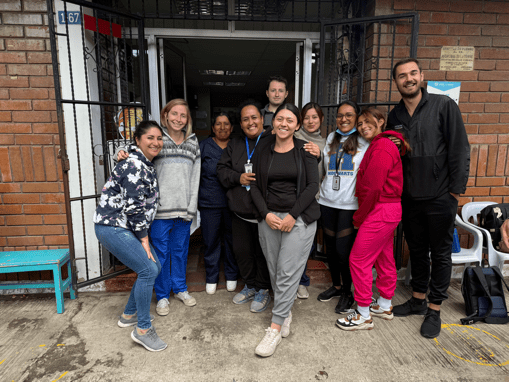
Within the Centro de Salud, all personnel are assigned one day out of the week to do “extramural” or community outreach. This can encompass anything from vaccine campaigns, home visits for immobile patients, neighborhood canvasing to document the number of women, children and senior citizen that live in the area, or even visits to local businesses to give health talks.

During my month in Ecuador, I had the opportunity to work alongside many wonderful people, learning about the kind of work that is carried out in a rural health center. Most mornings were spent in clinic doing routine visits for patients with chronic conditions, prenatal visits or performing well-child checks. Being exposed to a large number of children and pregnant patients, I gained insight into the standard of care for pediatric and obstetric patients in Ecuador. I learned about the use of the “carnet,” a booklet used to document growth charts and key lab results. I found the carnet to be an effective educational tool for engaging patients in their own healthcare. For instance, I worked with a pregnant patient who was classified as high-risk due to her weight and was concerned that she needed to lose weight during pregnancy. Using the growth charts in the carnet, I was able to show her the recommended range for healthy weight gain during pregnancy. I also highlighted the nutrition sections within the carnet as a helpful resource for balanced meal planning.


One of my primary goals during my time in Puembo was to prioritize patient education during every visit. I observed that many patients lacked continuity of care, often seeing a different physician each month, which could lead to confusion and uncertainty about their health. To help address this, I made it a point to ask patients about any questions or concerns they had regarding their care and used each encounter as an opportunity to educate them about their condition and treatment. By enhancing patients’ understanding of their health, we can empower them to take an active role in their care, transforming them from passive recipients to informed and engaged participants.
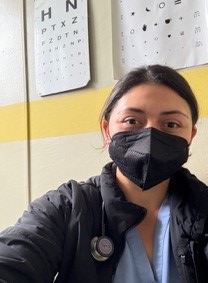
During my extramural day, I had the valuable opportunity to contribute to the palliative care of a patient living with a neurodegenerative disorder. As part of the care team, I assisted with the weekly cleaning and dressing of the patient’s pressure ulcers, ensuring comfort and preventing further complications. Additionally, I took part in extramural vaccination campaigns, where we administered vaccines within the community and reviewed children’s immunization records to identify and address any missed vaccinations.

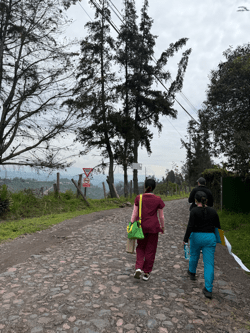
Sitting among the clouds at 9,350 ft above sea level and located at the center of the world at the equator, the sun beams down on its residents at a different intensity than the San Diego sun. For Ecuadorians, this has resulted in an increase in skin cancers with the most common being basal cell carcinomas. According to Ecuador’s Registro Nacional de Tumores (National Registry of Tumors), 64% of neoplastic lesions in Quito, Ecuador are basal cell carcinomas. Due to the high prevalence in skin cancers, a dermatology clinic was created within the Centro de Salud in Puembo.

On Tuesday afternoons, I had the opportunity to participate in this dermatology clinic, which served patients referred from all the surrounding Centros de Salud. During these sessions, we provided patient education, medical management, and performed procedures such as cryotherapy. If patients required escalation of care, they were referred to the CEPI dermatology center, where I spent my Thursday mornings. Beginning with case presentations by the Derm residents along with their in-house pathologist, cases included the most common diagnosis of basal cell carcinomas and benign nevi to interesting case discussions about cutaneous blastomycosis and rare conditions such as phacomatosis spilorosea. Following case presentations, we shared breakfast in their beautiful, art-filled patio before attending to patients in clinic. While CEPI is a private dermatology clinic, it has partnered with the Centro de Salud at Puembo as a referral center and provides diagnostic biopsies and surgeries free of cost to patients.

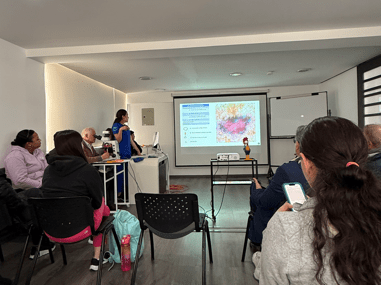
The program deepened my understanding of how medical care can be effectively integrated with public health. Although I have worked in community clinics and have gained experience in public health within the United States, my time in Ecuador exposed me to a fully integrated system that was both unique and eye-opening. I saw firsthand how this system facilitated essential services such as vaccine campaigns, colon cancer screenings, and prenatal education, completely free of charge for patients. Additionally, I gained a broader perspective on the concept of justice, particularly in terms of resource allocation. Being more mindful of the limited resources available, I learned how to make equitable decisions about their use. I also became more attuned to the financial impact on patients, as the Centro de Salud had limited medications and services, so the patient had to pay out of pocket for certain medications and tests.

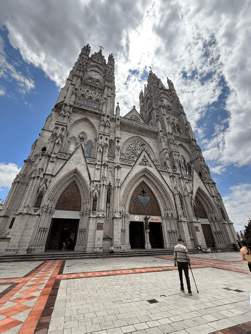
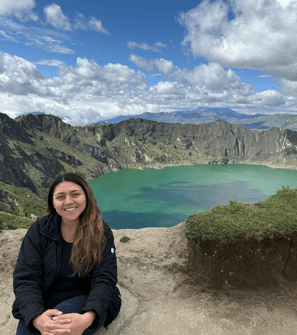
This rotation provided me with a valuable opportunity to apply my clinical knowledge in a resource-limited setting while also immersing myself into the culture of the people I was serving. On weekends, I got the opportunity to explore the streets and beautiful landscapes of Ecuador, visiting the historic center composed of several plazas and countless churches, museums and restaurants. I got to explore Mitad del Mundo or Middle of the World, where the north and south poles meet at the equator. Being in the Andes mountains, I could not pass up the opportunity to visit the volcanoes of Ecuador. I visited the snow-capped Cotopaxi volcano and Quilotoa, a water-filled crater lake.


I leave Ecuador with many memories, adventures and new friends. I am grateful for the experience and hope to only grow more in my understanding of global health and the wonderful lessons learned along the way.