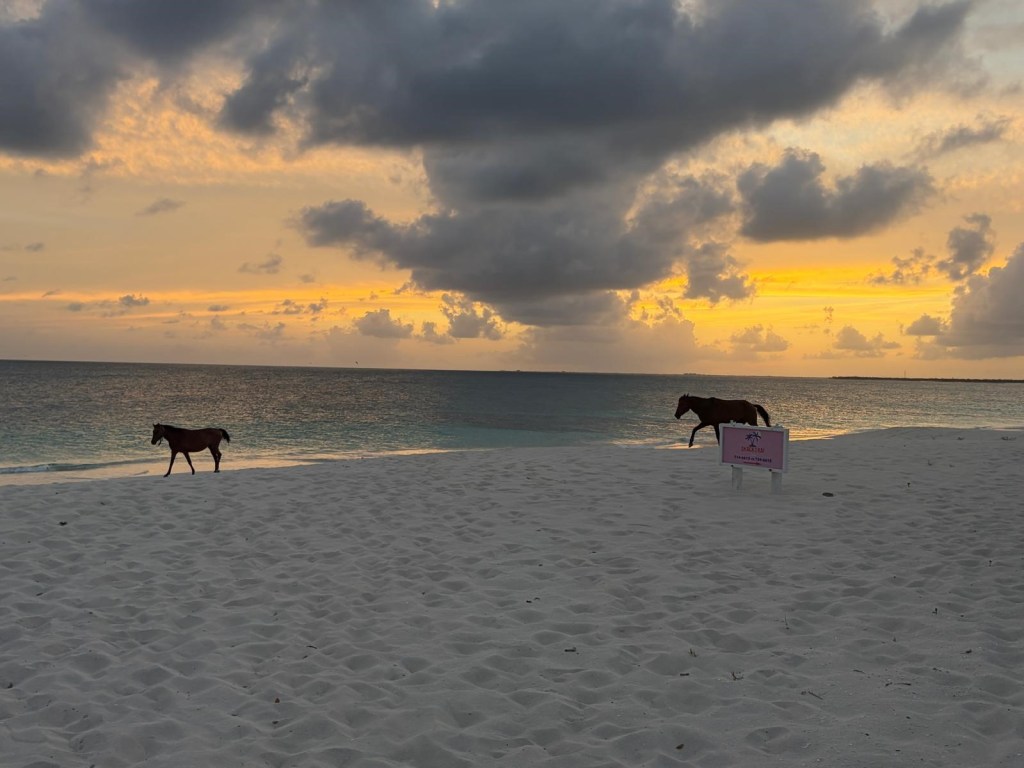
In September 2017, the Caribbean nation of Antigua and Barbuda was hit by Category 5 Hurricane Irma. The eye of the storm passed directly over Barbuda, leaving a path of destruction in its wake and forcing the evacuation of the entire island. Nearly a decade later, Irma continues to cast a long shadow, shaping the trajectory of the island’s healthcare system, economy, land rights, and ultimately, the health of Barbudans.
This summer, we set out to characterize the burden of non-communicable disease (NCD) on the island, surveying 90 households across Barbuda and interviewing key informants working in healthcare, media, conservation, and local government. The more time I spent talking with Barbudans, the clearer it became that health on Barbuda is inextricably linked to the devastation wrought by Hurricane Irma and the wave of development that followed.
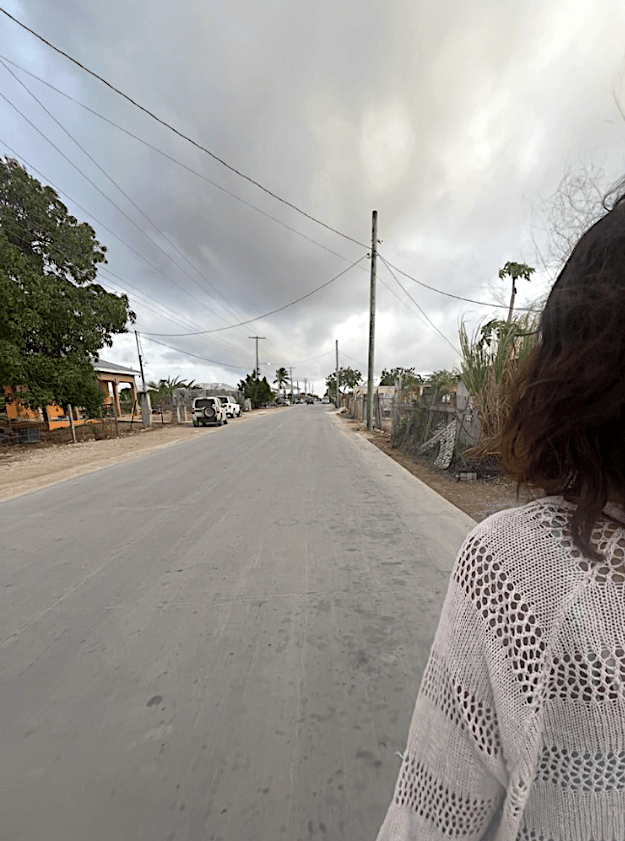
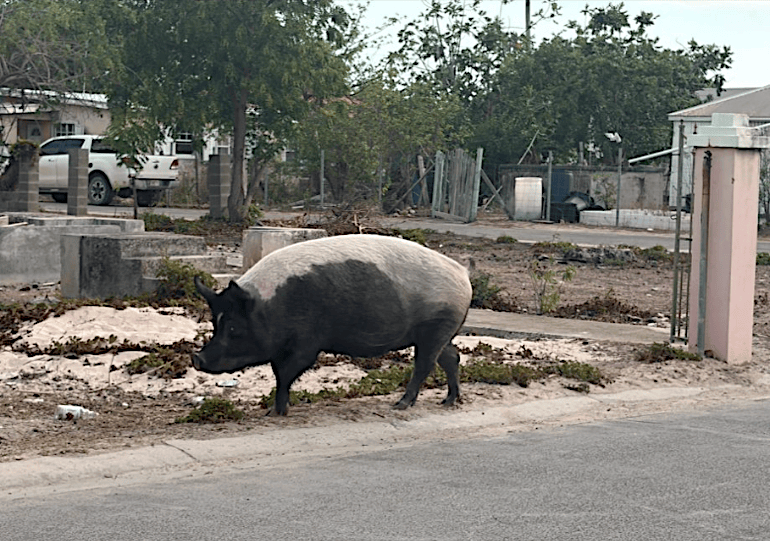
Most Barbudans live in Codrington, where concrete homes and small shops lining dirt roads branch outward from the country’s only paved road like the roots of a tree. Beyond town, a different Barbuda is taking shape: beachfront resorts nestled within the island’s growing luxury enclaves. The contrast between these two versions of Barbuda became clearest to me in a conversation with someone who worked for one of those developments. Looking at Barbuda’s open land, beaches, and reefs, he told me he saw “dollar signs,” a goldmine of wasted economic opportunity. I was struck not by what he saw in the island, but by everything he didn’t see, everything Barbudans had been showing me all summer. Where he saw an asset waiting to be developed, they described something they cared for and belonged to, rather than something that simply belonged to them. That gap in perspective isn’t incidental to Barbuda’s health crisis. It’s at the center of it.
Alongside the weakening of the historic Barbuda Land Act that established communal land ownership for all citizens, Irma’s devastation paved the way for a wave of development that has since swept the island: an airport exclusively for private jets, a golf course, the restaurant Nobu, and gated resorts that block beach access. Still, one of the same development groups donated Barbuda’s X-ray machine and ambulance, and arranged for visiting specialists (OB-GYN, urology, dental, and ophthalmology among them) to come to the island quarterly, filling gaps the government hadn’t. The same interests reshaping the island against many residents’ wishes are also responsible for some of the only functioning diagnostic equipment on it. That doesn’t resolve the tension so much as sharpen it. Barbuda’s health system now depends, in part, on the goodwill of the very forces eroding the land its residents’ health depends on.
The chronic disease burden we measured was substantial: 28% of Barbudans rated their overall health as poor, with common conditions including arthritis, hypertension, high cholesterol, depression, and diabetes. Still, those figures almost certainly underestimate the true NCD burden, because diagnosing chronic disease on Barbuda is itself difficult due to the lack of diagnostic services and specialist care on the island.
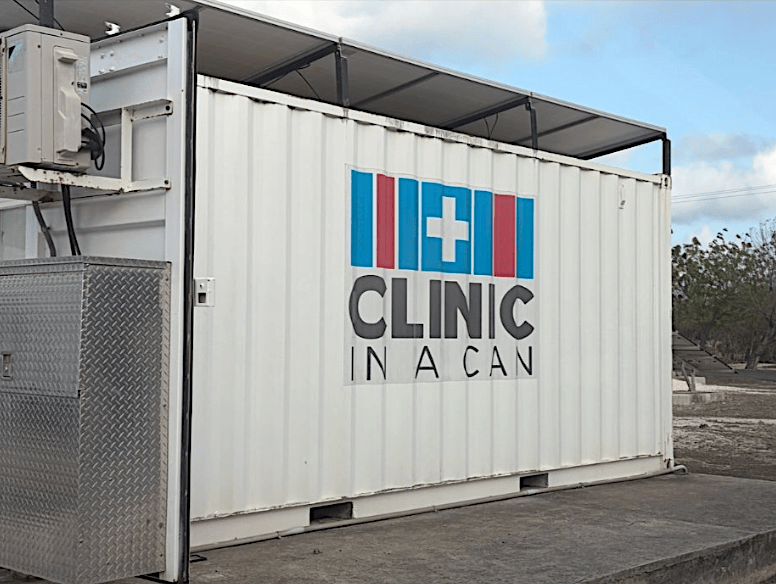
Hannah Thomas Hospital and its laboratory were destroyed in Irma. The hospital has since been rebuilt, but it still lacks a functioning lab. The X-ray machine they have needs a new battery to function. Without access to lab testing or imaging, diagnoses on Barbuda must be made clinically. For services that are not available locally, including dental, eye, and specialist care as well as diagnostic testing, residents must travel to Antigua. Accessing care in Antigua costs hundreds of dollars between airfare or ferry tickets, taxis, lodging, and can easily rise into the thousands when considering the cost of medical services themselves. Seventy-one percent of respondents told us they had delayed or avoided care because getting to Antigua was too difficult. Access is further constrained by staffing. The hospital’s sole Barbudan physician splits his time, two weeks on Barbuda and two weeks on Antigua, supplemented by three visiting physicians, and many Barbudans told us they wait to seek care until he returns.
Nearly a decade after Hurricane Irma, its effects are still visible. Over half of the people we surveyed reported that they were displaced to Antigua for more than four months following Irma, with many Barbudans still rebuilding their homes today. About a third of respondents reported that their physical health, mental health, diet, and exercise had worsened since the hurricane. Many described feeling anxiety and fear whenever there was strong wind because it evoked the relentless shriek of the wind during Irma. Meanwhile, mental health care is essentially nonexistent in Barbuda. The island has no counselors, psychologists, or psychiatrists. Residents frequently raised stigma as a potential barrier to seeking mental health care. Yet, when surveyed, Barbudans were overwhelmingly in favor of bringing services to the island: 88% said they wanted mental health care available in Barbuda, and 52% said they would use it if it were available. Many connected this need directly to Hurricane Irma. We found that the trauma of the storm itself as well as the months of displacement to shelters in Antigua contributed to a substantial mental health burden, with 1 in 5 respondents screening positive for depression or anxiety.
The continued loss of land and culture further contributed to declining mental health. For many Barbudans, loss of land is inseparable from a loss of self, a connection residents trace back to the moment they were born: “The tradition is, once the baby’s born, and the navel string is dried, you bury it under a tree in your yard, and that’s where the connection starts. It’s a physical thing, so lots of people can tell you where their navel string has been buried—that’s the connection to the land.”
For Barbudans, connection to the land doesn’t end at identity. Their health is innately tied to the land through the food it provides, with diet being a major contributor to the island’s burden of chronic disease. That connection has changed across generations, as development has pulled younger Barbudans away from agricultural work and into new jobs. Yet, household incomes have failed to keep pace with development’s rising cost of living. The result is substantial food insecurity, with 48% of households struggling to meet basic needs, and 41% running out of food before they had money to buy more. I also heard again and again how the community stepped in when that happened. Residents told me that local shopkeepers would let families take groceries and pay them back when they could, or that neighbors and relatives would make sure there was food on the table until they were back on their feet. Food insecurity was common, but so was the expectation that people would look out for one another. Stories like these helped me to understand just how deeply interconnected the community itself is, with a population of only around 2,000 people. One woman told me that much of the island’s community traces back to six main families. She joked that as a teenager, you had to be careful about who you developed a crush on, lest you later discover they were a distant cousin.
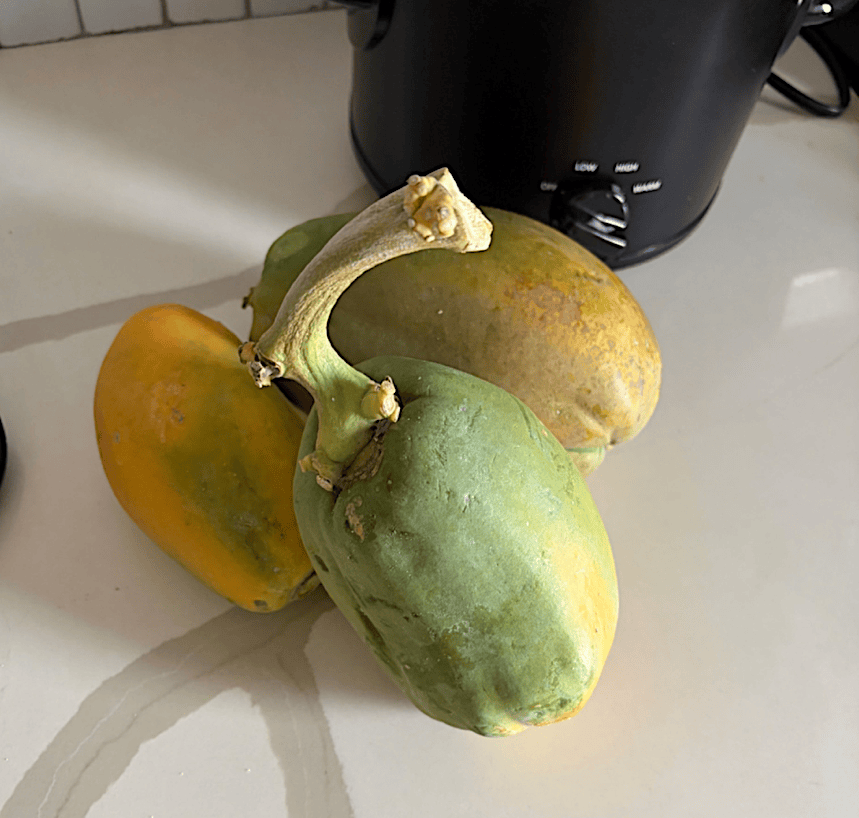
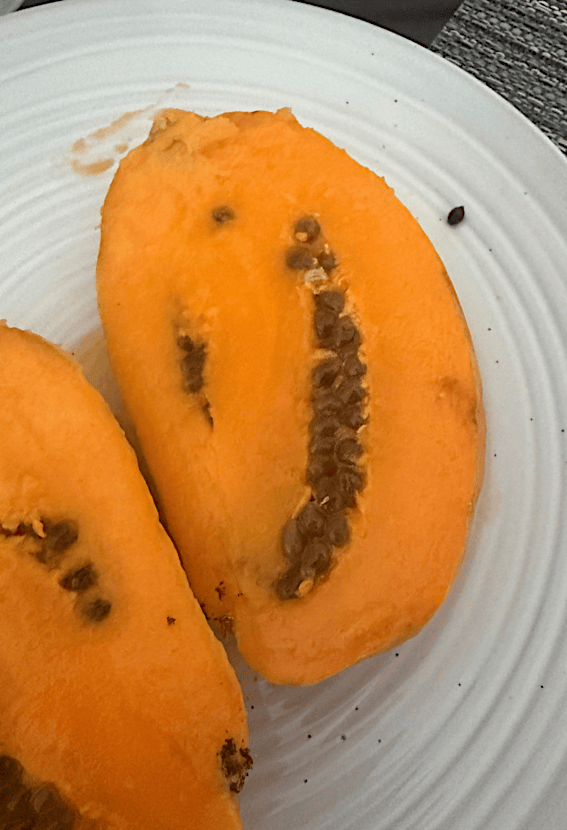
As local agriculture has declined, so has the traditional diet it once sustained, replaced by a growing reliance on imported foods and a rapid rise in the availability of fast food. Despite much lower household incomes than in San Diego, groceries cost as much or more than what I was used to paying at home because nearly everything must be imported. Beyond cost, reliance on imports meant canned and dried goods made up a disproportionate share of people’s diets. Fresh produce was often simply unavailable, and even when it wasn’t, the cost was prohibitive: a single tomato could cost $5 USD, a small watermelon $25 USD.
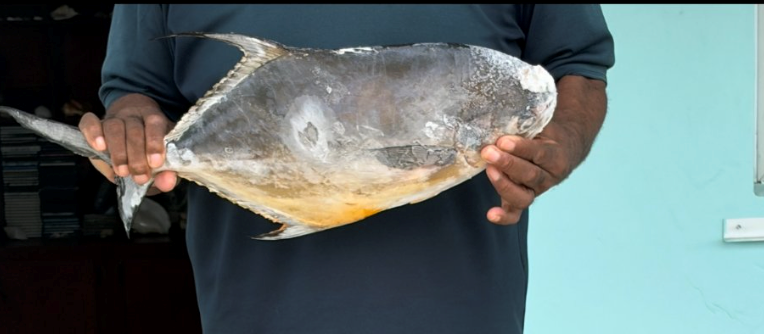
In light of growing food insecurity on Barbuda, Barbudans are increasingly reliant on the sea to maintain a healthy diet, with fish and seafood being the single most common food group in residents’ daily diets. Yet seafood is also the food source most directly threatened by development, as construction has degraded the lagoons that serve as nurseries for juvenile marine life, restricted road access to key fishing grounds, and claimed hundreds of acres of Ramsar-protected wetlands and Barbuda’s only national park in the process.
That environmental loss carries another risk on an island still recovering from Hurricane Irma: the lagoons, mangroves, and coastal dunes also form a natural buffer against hurricanes and storm surge. Development is therefore placing pressure not only on a resource that helps buffer Barbudans against dependance on an expensive imported food system, but also on the ecosystems that help buffer the island itself against future storms.
Taken together, these findings describe a health crisis that cannot be separated from its context. Barbuda’s rising burden of chronic disease is not simply a matter of individual behavior. It is downstream of a decade of disaster recovery that has reshaped who has access to land, food, and healthcare on the island, often to Barbudans’ own exclusion. The same development displacing fishing grounds and driving up the cost of a tomato is unfolding alongside a health system that still lacks a working lab, a mental health workforce, or access to specialist care. If Barbuda’s health outcomes are going to improve, any response must reckon with all of it at once: the storm, the development that followed it, and the everyday economic and environmental conditions Barbudans are navigating in between.
As I finish writing this, I keep coming back to the fact that on Barbuda, identity is quite literally buried in the ground. Barbuda’s health crisis is the same story told a different way. You can’t separate what’s happening to people from what’s happening to their land. On Barbuda, there are two answers to the question, What does the land provide? One sees the economic value that could be extracted from the land. The other acknowledges the land itself as providing something far more fundamental: food, protection, livelihood, identity, and belonging. Barbuda’s future, and the health of its people, may depend on which of those answers shapes what comes next.