It is a distinct experience to feel that you are living in a place as opposed to visiting. This is one of the strengths of the global health academic concentration at UCSD. I have felt integrated into the cities and healthcare systems that I have worked in. As an MS1, this was Maputo, Mozambique and the setting was Hospital Central de Maputo (HCM). Now, as a 4th year, ascending into the treacherous and unknown territory of my Internal Medicine Internship, I chose Quito, Ecuador and was assigned to Hospital de los Valles (HDLV) in a peripheral area of the city called Cumbayá. When I made this decision, I didn’t know very much about the city, its inhabitants or its history. As many of us who are interested in global health do, I started with fun facts and tried to go from there.
I will report some of the basics. Modern-day Ecuador has been inhabited for thousands of years and was incorporated into the Incan Empire by the 15th century. After that, it was conquered by Spain until it achieved liberation and became part of Gran Colombia, a short-lived republic that included much of present-day Ecuador and it’s neighbors Colombia, Venezuela, and Panama. This context as well as the geography of the Andes connect Ecuador, Colombia and Peru into the Andean Region which shares a history and many cultural elements.
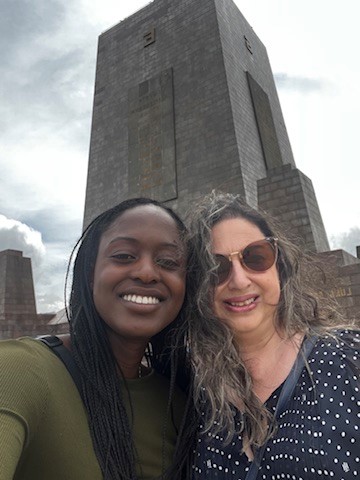
For those of you who will consider this site for your 4th year clinical rotation, I recommend choosing to live with a host family. This was a key element that made me feel like I was really living in Quito rather than just breezing through. In late March, I landed on an early morning and was collected by my own host, a fastidious woman named Monica (pictured above), who complemented me on my ability to communicate although I felt that my Spanish was still rusty and imperfect. As we drove through the broad avenues of Pichincha that morning on the way home, she shared that one of her daughters was studying Medicine. She also explained that she worked for a tourism agency and enjoyed designing itineraries for a living. Little did I know that she would make it her mission to ensure (despite my jet lag) that I enjoyed every free day to explore Ecuador. She shared with me the history of Quito as she knew it as an experienced guide, the demographics of the provinces, and what foods she loved from each. In particular, she and I would chat about our families and how the world and our 2 countries have changed in recent years – the good and the bad.
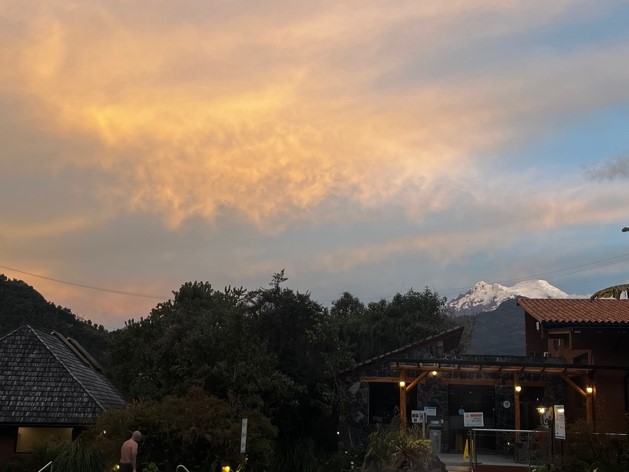
Another element of my rotation that gave perspective into Ecuador was the hospital. Before traveling for this rotation, I looked up some factoids about the geography and demographics of the city. Quito’s population of around 1.9 million, live at over 9,000 feet (2,850 meters) above sea level and as a result, long-term residents tend to have various physiologic adaptations to this altitude including higher blood hemoglobin levels on average. Many healthy Quiteños maintain lower baseline oxygen saturations between 90-95%, in contrast to the 95%+ seen in San Diego.
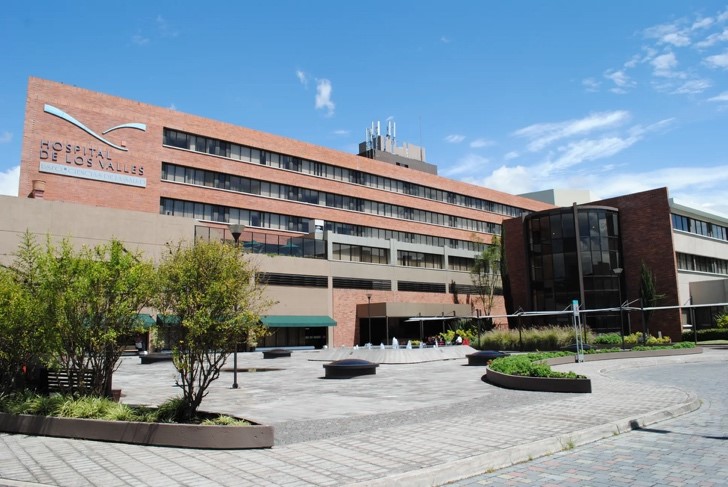
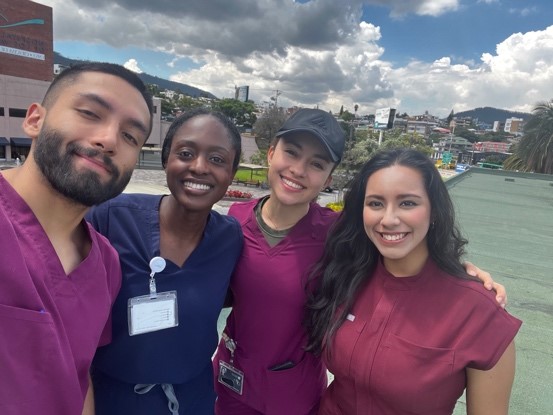
When I arrived to HDLV, I was integrated into a wards team on an internal medicine service. This team consisted of Attendings, Internal Medicine Residents, Psychiatry Residents doing their mandatory Internal Medicine time, and I worked most closely with the sixth-year medical students also called interns as they were in their practical year or internado. The nurses and Residents also called them doctoritos, little doctors, an affectionate term mostly used alongside a request for them to repeat a blood pressure, perform an EKG, print copies for the paper medical record, or get a patient’s signature. Working alongside these talented students reminded me of what it feels like to be in the trenches, and I began to get a small peek into their daily lives. We ate lunch together, scrambled together for paper to print the morning patient list, and worried about our patient’s who had transferred to the UCI – Intensive Care Unit. At the end of the day, we would each go our own ways, each taking the bus home or to run daily errands.
Working with these students also highlighted the many differences between our 2 systems. They explained to me how they rotate on many of the same services – ObGyn, Community Health, IM, Surgery, Psychiatry, but their roles vary. The Residents explained to me that they pay tuition for their programs, despite working long hours. 2 of the 3 interns I worked with aspire to apply as International Medical Graduates to the US Match in Surgical specialties. These students were extremely well-prepared, passionate, and ambitious. I will continue to look out for their progress and eventual success.
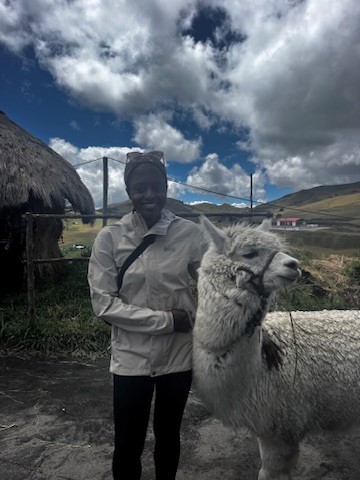
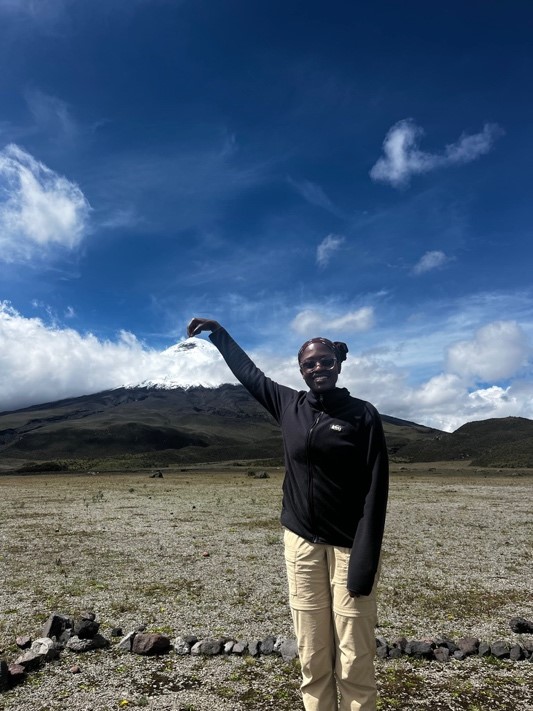
Despite this great opportunity to integrate and feel part of Quiteño culture, I was aware of being a visitor, a foreigner. Through the encouragement of my host, I traveled. I climbed Cotopaxi volcano (more or less), and met llamas and alpacas and bought scarves and blankets made from their fur. I also faced challenges of daily life. I forgot the word for “policy”, I didn’t know how to administer an EKG, or whether to use the informal tu or the formal usted with the Residents. But in the same way that discomfort yields the greatest lessons learned in the clinical environment, these challenges gave me the opportunity to acquire excellent clinical pearls, meaningful connections, and what I see as a successful global health clinical experience.